Faculty Bookshelf by Fiction
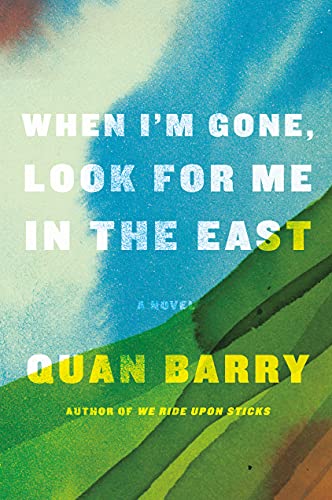
When I'm Gone, Look For Me in the East
Barry, Amy Quan. When I'M Gone, Look For Me in the East . Penguin Random House , 2022. Print.
Tasked with finding the reincarnation of a great lama—a spiritual teacher who may have been born anywhere in the vast Mongolian landscape—the young monk Chuluun sets out with his identical twin, Mun, who has rejected the monastic life they once shared. Their relationship will be tested on this journey through their homeland as each possesses the ability to hear the other’s thoughts.Proving once again that she is a writer of immense range and imagination, Quan Barry carries us across a terrain as unforgiving as it is beautiful and culturally varied, from the western Altai mountains to the eerie starkness of the Gobi Desert to the ancient capital of Chinggis Khaan. As their country stretches before them, questions of faith—along with more earthly matters of love and brotherhood—haunt the twins. Are our lives our own, or do we belong to something larger? When I’m Gone, Look for Me in the East is a stunningly far-flung examination of our individual struggle to retain our convictions and discover meaning in a fast-changing world, as well as a meditation on accepting what simply is.
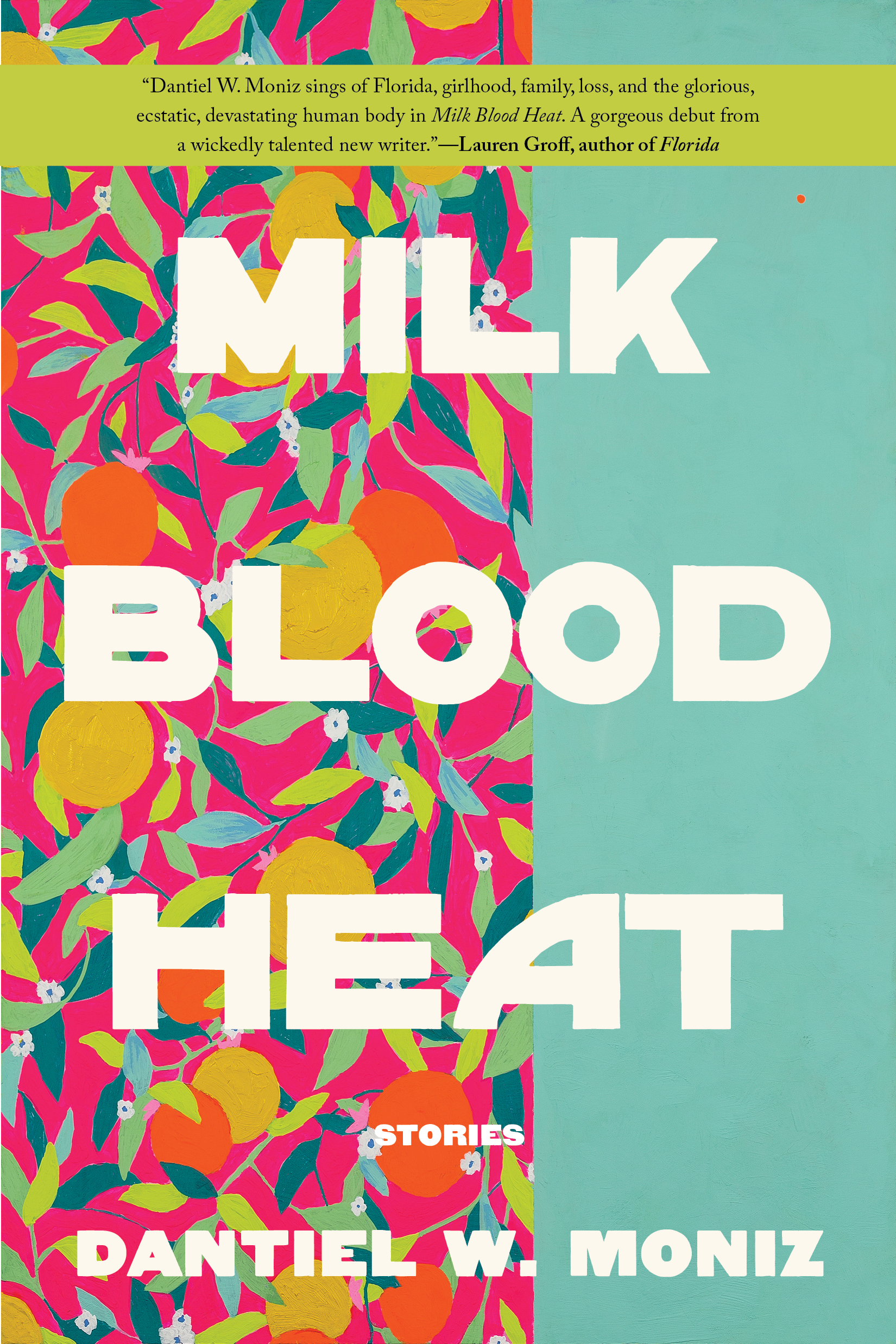
Milk Blood Heat
Moniz, Dantiel W. Milk Blood Heat. Grove Press , 2021. Print.
A livewire debut from Dantiel W. Moniz, one of the most exciting discoveries in today’s literary landscape, Milk Blood Heat depicts the sultry lives of Floridians in intergenerational tales that contemplate human connection, race, womanhood, inheritance, and the elemental darkness in us all. Set among the cities and suburbs of Florida, each story delves into the ordinary worlds of young girls, women, and men who find themselves confronted by extraordinary moments of violent personal reckoning. These intimate portraits of people and relationships scour and soothe and blast a light on the nature of family, faith, forgiveness, consumption, and what we may, or may not, owe one another. A thirteen-year-old meditates on her sadness and the difference between herself and her white best friend when an unexpected tragedy occurs; a woman recovering from a miscarriage finds herself unable to let go of her daughter—whose body parts she sees throughout her daily life; a teenager resists her family’s church and is accused of courting the devil; servers at a supper club cater to the insatiable cravings of their wealthy clientele; and two estranged siblings take a road-trip with their father’s ashes and are forced to face the troubling reality of how he continues to shape them. Wise and subversive, spiritual and seductive, Milk Blood Heat forms an ouroboros of stories that bewitch with their truth, announcing the arrival of a bright new literary star.
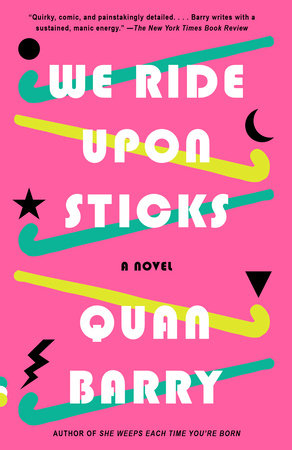
We Ride Upon Sticks
Barry, Amy Quan. We Ride Upon Sticks. Penguin Random House, 2021. Print.
In the town of Danvers, Massachusetts, home of the original 1692 witch trials, the 1989 Danvers Falcons will do anything to make it to the state finals—even if it means tapping into some devilishly dark powers. Against a background of irresistible 1980s iconography, Quan Barry expertly weaves together the individual and collective progress of this enchanted team as they storm their way through an unforgettable season. Helmed by good-girl captain Abby Putnam (a descendant of the infamous Salem accuser Ann Putnam) and her co-captain Jen Fiorenza (whose bleached blond “Claw” sees and knows all), the Falcons prove to be wily, original, and bold, flaunting society’s stale notions of femininity. Through the crucible of team sport and, more importantly, friendship, this comic tour de female force chronicles Barry’s glorious cast of characters as they charge past every obstacle on the path to finding their glorious true selves.
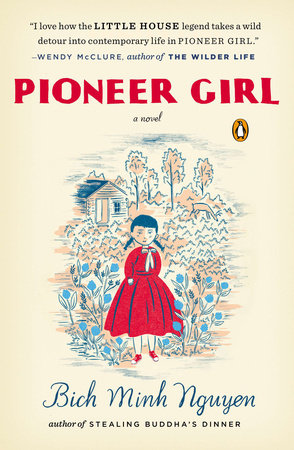
Pioneer Girl
Nguyen, Beth (Bich Minh). Pioneer Girl. Penguin Books, 2015. Print.
From Penguin: Lee Lien has long dodged her Vietnamese family’s rigid expectations by immersing herself in books. But now, jobless with a PhD in literature, she is back at home, working in her family’s restaurant under her mother’s hypercritical gaze—until an heirloom from their past sends Lee on a search for clues that may lead back to Wilder herself, transforming strangers’ lives as well as her own.
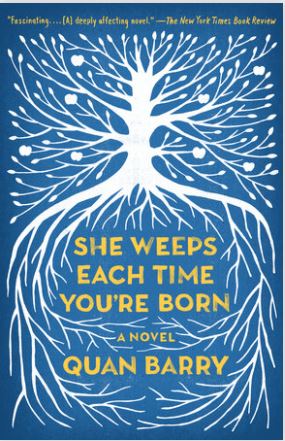
She Weeps Each Time You're Born
Barry, Amy Quan. She Weeps Each Time You'Re Born. Penguin Random House, 2015. Print.
Vietnam, 1972: under a full moon, on the banks of the Song Ma River, a baby girl is pulled out of her dead mother’s grave. This is Rabbit, who is born with the ability to speak with the dead. She will flee from her destroyed village with a makeshift family thrown together by war. As Rabbit channels the voices of the dead, their chorus reconstructs the turbulent history of a nation, from the days of French Indochina and the World War II rubber plantations to the chaos of postwar reunification. Radiant, lyrical, and deeply moving, this is the unforgettable story of one woman’s struggle to unearth the true history of Vietnam while also carving out a place for herself within it.
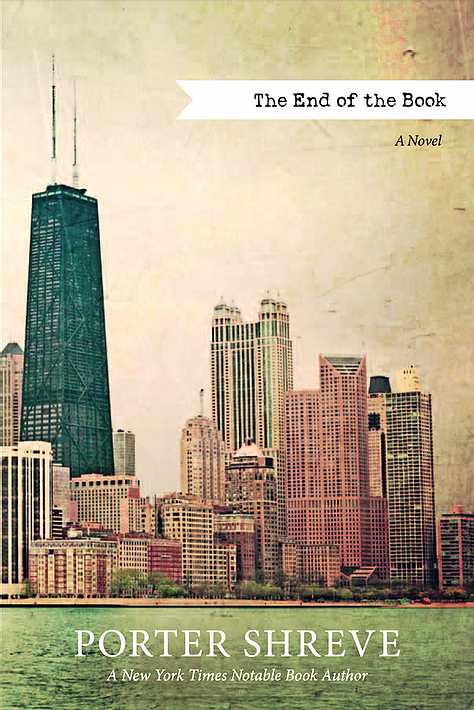
The End of the Book
Shreve, Porter. The End of the Book. LSU Press, 2014. Print.
From LSU Press (Yellow Shoe Fiction): “The End of the Book is the story of an aspiring contemporary novelist who may or may not be writing a sequel to a forgotten classic, Sherwood Anderson’s Winesburg, Ohio. Adam Clary works in Chicago for a famous Internet company on a massive project to digitize the world’s books, but secretly he hates his job and wishes to be a writer at a time when the book as physical object and book culture itself have never been more threatened. He is the son of a dissipated Anderson scholar, thus his obsession with Winesburg. Counterpointing Adam’s story is that of George Willard, the young protagonist of Anderson’s book, who arrives in Chicago around 1900 when it was the fastest growing city in the history of the world. Through alternating chapters, we follow George’s travails, including his marriage to the wealthy daughter of his boss, his affair with his hometown sweetheart, his artistic crisis, breakdown and flight, and along the way we see the echoes and intersections between his life and Adam’s struggling in two similar Americas, two similar times in the life of the book.”
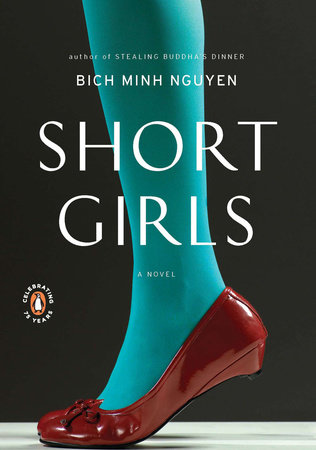
Short Girls
Nguyen, Beth (Bich Minh). Short Girls. Penguin Books, 2010. Print.
From Penguin: Called “A writer to watch, a tremendous talent” by the Chicago Tribune, Bich Minh Nguyen makes her fiction debut with the deeply moving and entertaining story of two Vietnamese sisters. Aside from their petite stature, Van and Linny Luong couldn’t be more different. Diligent, unassuming Van works as an immigration lawyer in the Michigan suburbs where she resides with her handsome, Chinese-American lawyer husband. Beautiful, fashionable Linny lives in Chicago and has drifted into an affair with a married man. When Van’s picture-perfect marriage collapses and Linny finds herself grappling to escape her dead-end life, the long-estranged sisters are unable to confide in one another- until their eccentric inventor father calls them back home to the Vietnamese American community they fled long ago.

When the White House Was Ours
Shreve, Porter. When the White House Was Ours. Houghton Mifflin Harcourt, 2008. Print.
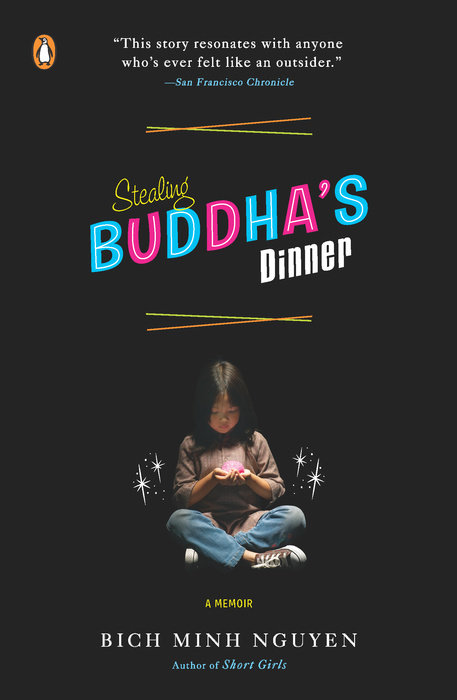
Stealing Buddha's Dinner
Nguyen, Beth (Bich Minh). Stealing Buddha'S Dinner. Penguin Books, 2008. Print.
From Penguin: As a Vietnamese girl coming of age in Grand Rapids, Michigan, Nguyen is filled with a rapacious hunger for American identity, and in the pre-PC-era Midwest (where the Jennifers and Tiffanys reign supreme), the desire to belong transmutes into a passion for American food. More exotic- seeming than her Buddhist grandmother’s traditional specialties, the campy, preservative-filled “delicacies” of mainstream America capture her imagination. In Stealing Buddha’s Dinner, the glossy branded allure of Pringles, Kit Kats, and Toll House Cookies becomes an ingenious metaphor for Nguyen’s struggle to become a “real” American, a distinction that brings with it the dream of the perfect school lunch, burgers and Jell- O for dinner, and a visit from the Kool-Aid man. Vivid and viscerally powerful, this remarkable memoir about growing up in the 1980s introduces an original new literary voice and an entirely new spin on the classic assimilation story.
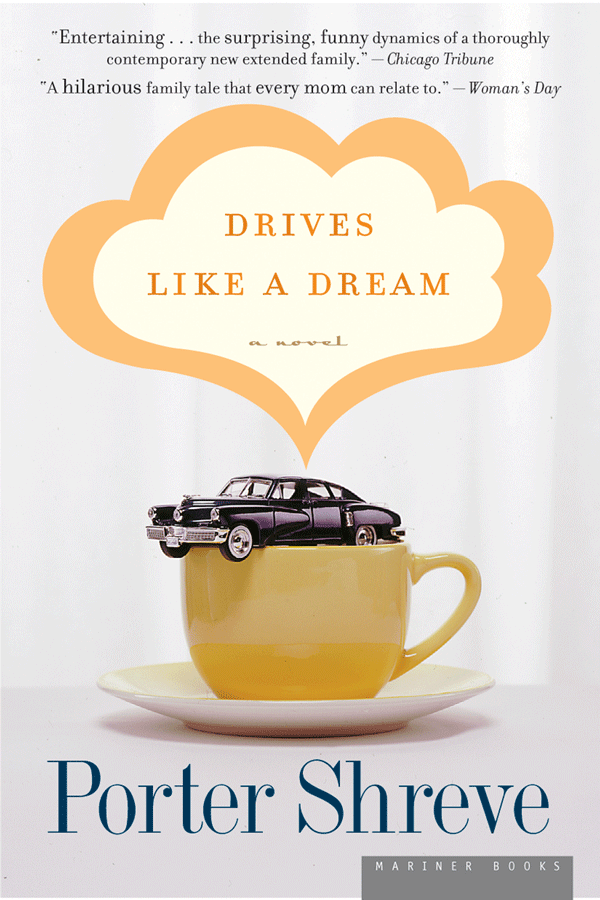
Drives Like A Dream
Shreve, Porter. Drives Like A Dream. Houghton Mifflin Harcourt, 2006. Print.
From Houghton Mifflin Harcourt: The New York Times called Porter Shreve’s first novel, The Obituary Writer, “an involving and sneakily touching story whose twists feel less like the conventions of a genre than the convolutions of a heart—any heart.” Newsday hailed the book as “a substantial achievement,” and Tim O’Brien described it as “taut, compelling, and moving . . . beautifully written, engrossing from start to finish.” Shining with the same heart and humor, Shreve’s second novel, Drives Like a Dream, is a smart, wry tale about a modern-day mother in the midst of a lifestyle crisis—and her outlandish attempts to get her family back. Lydia Modine is sixty-one and about to come undone. Her three grown-up children have flown the coop. She hasn’t seen them together in more than a year, and now her ex-husband is about to remarry a woman half his age. And the insults keep coming: Lydia is stuck on a book she’s writing about Detroit’s car industry, which uncannily parallels her own life — out with the old model, in with the new. She’s poured her soul into her family, only to be abandoned in the City of Dream Machines. But then a twist of fate introduces her to Norm, an eco-car fanatic out to remake her and the world. Is he the answer to all of her problems, or does he hold the one secret that just might get her children back to Detroit, home for good? A warm, funny, and affecting novel that’s sure to appeal to anyone who has longed for an alternate life, Drives Like a Dream confirms that sometimes when you set out for a spin, the twists and turns can be perfectly rewarding—and right.
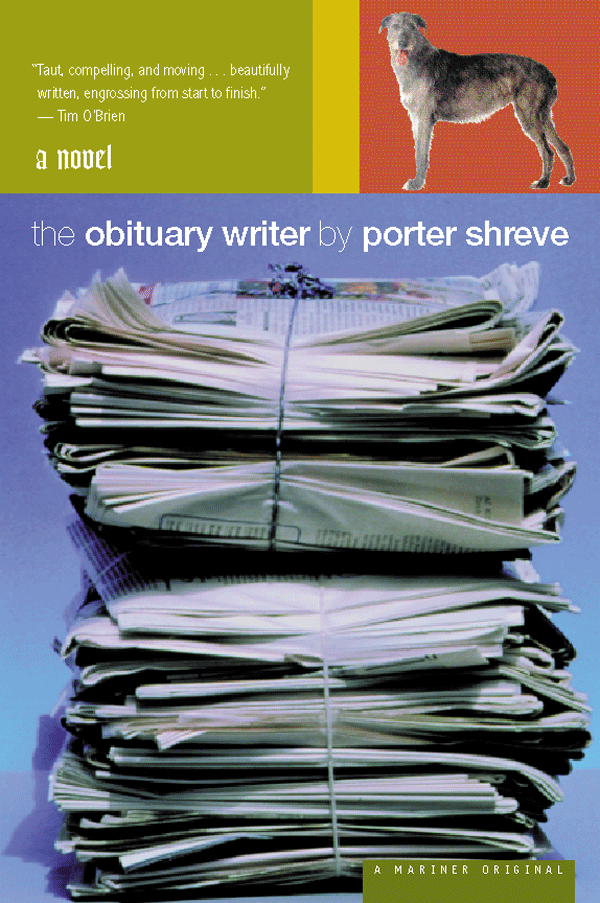
The Obituary Writer
Shreve, Porter. The Obituary Writer. Houghton Mifflin Harcourt, 2000. Print.
From Houghton Mifflin Harcourt: Gordie Hatch is twenty-two, charmingly naive, and certain that his first job as a writer for the ST LOUIS INDEPENDENT’S obituary page will be a stepping stone to a crackerjack career in journalism. The year is 1989, and Gordie watches helplessly while dramatic events — the very events that could be his lucky break — unfold in the world around him. But nothing can prepare him for the call he gets from Alicia Whiting, a young widow with an accent he can’t quite place. When Gordie agrees to meet Alicia, against his better judgment, his journalistic curiosity quickly turns into an obsessive search for the outrageous truth behind the Whiting family. Shot through with affectionate humor and surprising twists and turns, THE OBITUARY WRITER introduces an author of enormous talent and heart. Porter Shreve brings a deft touch to the moments that mark a young person’s entrance into the world, and a sharp eye to the ways in which the lead story can be wonderfully, seductively misleading.