Caroline Gottschalk Helps Lead New Curriculum on Indigenous Land Dispossession
New modules offer faculty a new way to integrate Indigenous land history into their courses.
by Fabiola M. Martinez Del Valle
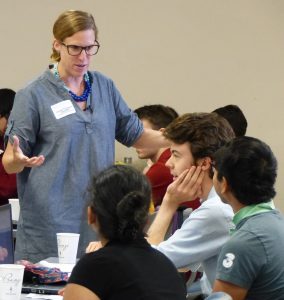
English professor and leader of the Headwaters Lab, Caroline Gottschalk was part of a cross-campus team that has developed a new set of educational modules exploring the history and legacy of Indigenous land dispossession in Wisconsin. Funded by the National Endowment for the Humanities, the project brings together faculty, staff, and graduate students from multiple departments to create interdisciplinary materials that examine the Morrill Act of 1862 and its role in establishing land-grant universities, including UW–Madison, through the expropriation of Tribal lands.
The modules are designed to support instructors across campus who want to teach this history but may not have the resources or background to build lessons from scratch. They incorporate historical texts, treaties, policies, land records, mapping tools, and oral histories to foster deeper understanding and discussion. Topics include the 1862 Moment, Land Grab Universities, Land Tenure and Privatization, Dams as Dispossession, and Mapping Indigenous Land Dispossession.
Gottschalk, who serves as principal investigator on the grant, emphasizes the importance of connecting this history to personal reflection and accountability. In a previous interview, she shared, “Education is important but it’s not the only thing we should do. So I do hope that this gets folks thinking, especially about questions like, ‘How do you want to live your life in light of this information?’”
The modules are available through the Center for Campus History and are intended to be widely shared and integrated into existing courses. Learn more and access the materials here.