Looking to the Modernists
Why university courses should confuse us, Modernist-style.
by Reilly White
When general disengagement with course content has become today’s academic norm, it is essential to stop skimming, and start struggling. I myself came to realize this last semester while reading works of Modernist literature in English 242: Literature and Culture II: From the Eighteenth Century to the Present. Modernism is an early-twentieth century intellectual and cultural movement that was notably characterized by a distinct break from convention. Whether that break from convention be rejecting literary, artistic, intellectual, or social tradition, it cultivated a deep and crucial sense of unfamiliarity, of which was meant to extend modes of perception. Such an achieved feeling of unfamiliarity was deemed essential as a starting point to creating greater change. When one experiences unfamiliarity, they are required to think outside the box, and to engage with themselves and their surroundings in a new and unique way. Only when one challenges themselves to experience unfamiliarity and discomfort will they be able to grow intellectually, emotionally, and psychologically, which is essential to foster greater change.
Around one-hundred years later, in today’s age of artificial intelligence and ever-increasing access to information, it can be difficult to devote time and energy to finding an answer. For, our minds seem to become malleable to the effects of such technological advancements, however inevitable that may be. This trend presents itself in many minute ways, of which can be notably observed in the context of university education. Course content, course assignments, and students’ ability to engage with both are being significantly affected by a resulting loss of attention span. Such a significant decline in attention span is likely a direct result of increased rapid access to information and artificial intelligence. Because our brains are no longer used to devoting more time and energy to learning, course content and course assignments have had to adapt to accommodate such. For example, classes are less likely to assign entire books; rather, excerpts from books have become a syllabi standard. Additionally, students’ verbal and written communication styles have become increasingly shorter, and simpler, as a result of the ways in which they engage with new information online, primarily through social media. Many view this adaptation as inevitable change, since rapid access to information and artificial intelligence have their many stakes in society. And perhaps, such change is inevitable.
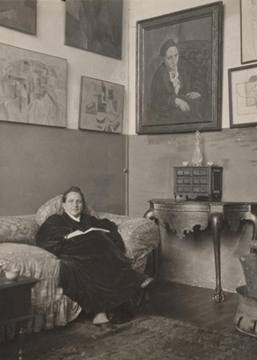
However, in the Fall Semester of 2025, I took Monique Allewaert’s English 242: Literature and Culture II: From the Eighteenth Century to the Present, where I had the opportunity to extend my own modes of perception by reading the works of Modernist poets like Gertrude Stein, T.S. Eliot, and Wole Soyinka. I was in awe at the effect of the experience of being unfamiliar and confused. For I engaged with my intellectual and creative capabilities in a way I had never done before. This led me to find immense value in Modernist work, whether it be literary, artistic, musical, or philosophical. Especially in today’s age, when our minds are used to finding instant answers, it is necessary that we look to the Modernists, to engage with learning in ways that will extend our modes of perception, and urge us to think for ourselves. The implementation of course content and assignments for the purpose of such will play a small but powerful role in balancing the intellectual, emotional, and psychological effects brought on by the age of rapid access to information and artificial intelligence, and potentially even create the conditions to conceptualize greater change.