ESL’s Afghan Tutoring Project Advances Global Education and TESOL Training
TESOL students empower Afghan women through English education.
by Fabiola M. Martinez Del Valle
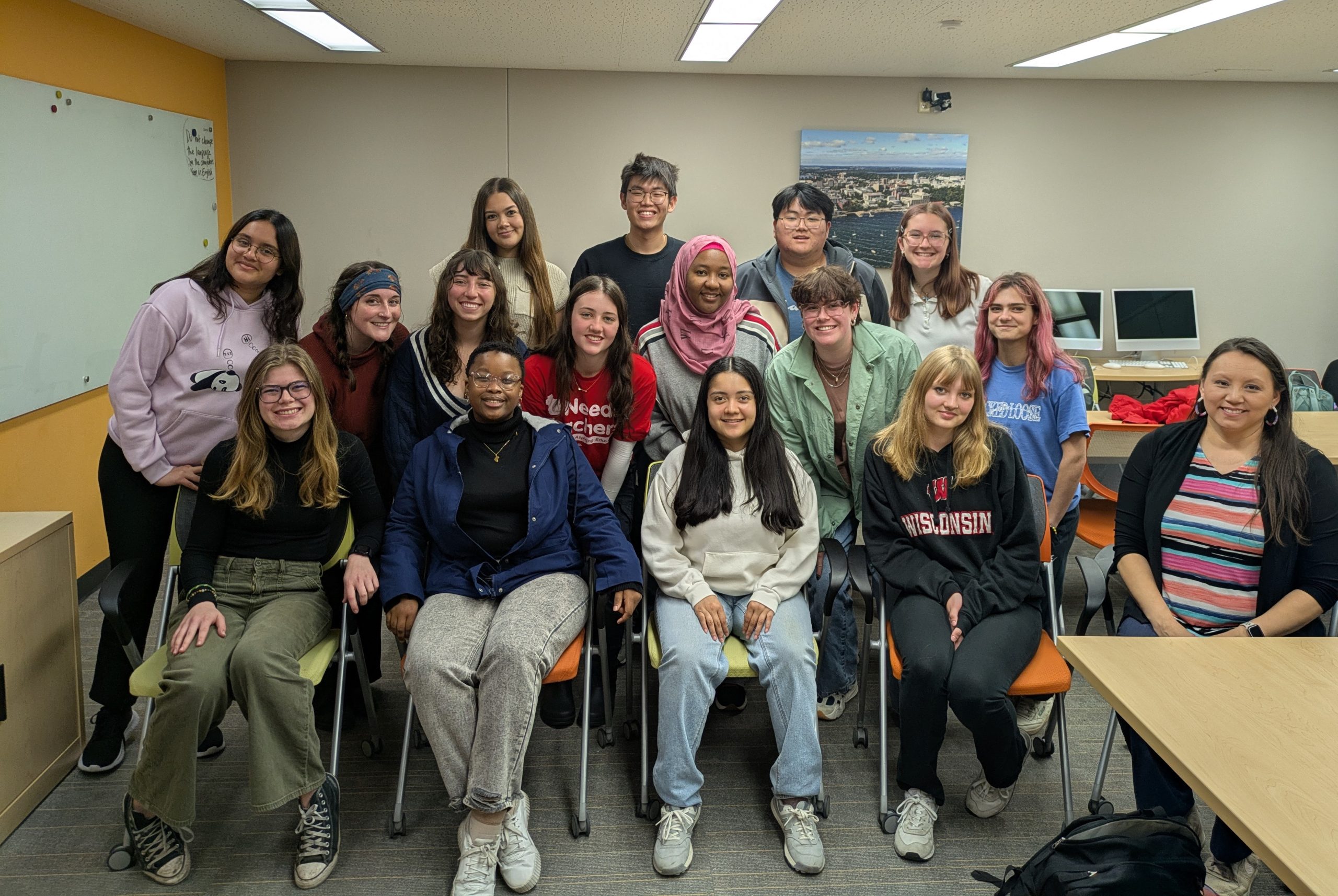
Under the leadership of Joseph Nosek, Director of UW–Madison’s English as a Second Language (ESL) Program and advisor for the TESOL Certificate, the Afghan Tutoring Project has become a model of global engagement and educational equity. Developed in collaboration with the NGO Educate Girls Now, the project offers remote English tutoring to Afghan women who have been barred from schools and universities under Taliban rule.
Launched in January 2023, the initiative extends the Wisconsin Idea globally while providing TESOL students with meaningful, real-world teaching experience. As Nosek explains, “Students enrolled in my introductory TESOL course, English 415, serve as English language tutors for girls and young women who have been deprived of educational opportunities in Afghanistan.” To date, 80 UW students have tutored 92 Afghan learners, many of whom are preparing for university study or rebuilding their education after years of disruption.
Integrated into English 415: Introduction to TESOL Methods, a core course in the Teaching English to Speakers of Other Languages (TESOL) Certificate. The project provides students with hands-on experience in trauma-informed teaching. Each student is paired with an Afghan learner for weekly one-on-one sessions focused on building English proficiency. These meetings often evolve into spaces of mutual learning, where learners share personal stories of resilience and cultural insight, and tutors gain a deeper understanding of global education challenges, while reinforcing the importance of education as a human right.
One student reflected, “It was humbling and exciting learning about my learner’s background. I hope I was able to provide her with as much quality information as she did with me.” Another described the experience as “phenomenal,” noting that it offered “a really good and low-stress environment to practice teaching” and helped them feel “a lot more comfortable teaching in a one-on-one setting.”
Beyond language instruction, the project fosters meaningful cross-cultural relationships. “You think you’re there to teach English,” one tutor shared, “but in reality it’s just like talking to a friend, and I couldn’t be more thankful.” Another student emphasized the emotional impact of the experience: “We really do have so much more in common than we’d ever imagine, even living halfway across the world from each other.”
The program reflects the department’s commitment to global engagement and experiential learning. It also contributes to broader efforts to close gender gaps in education, especially in regions where access is restricted. As Marilyn Mosley Gordanier, President of Educate Girls Now, explains:
“Our partnership is a tribute to the UW ESL Program and English Department’s generosity of heart, commitment to education, and the desire to empower these amazing young girls and young women. It has truly been a lifeline to the girls in the aftermath of the Taliban takeover and the dashing of their hopes of ever obtaining an education.”
As one student put it, “It really positively impacted me how motivated she was to learn and the things that may have tripped her up with her communication.” Most importantly, by combining TESOL training with real-world impact, the Afghan Tutoring Project exemplifies how education can transcend borders and how teaching itself becomes a form of advocacy.