How MUCH Showcases the Vitality of Humanities Scholarship at UW–Madison
MUCH is Changing the Landscape of Undergraduate Conference in the Midwest
by Shuta Kiba
When Evangeline Thurston Wilder and Gabriel Fiandeiro first pitched a plan to organize an undergraduate conference on the Humanities a year ago, they were told to aim for 40 attendees as a benchmark of success. Far exceeding expectations, 127 people joined the Madison Undergraduate Conference on the Humanities (MUCH) this year, showcasing the vibrancy of the humanities scholarship at UW–Madison. Given that there are few undergraduate conferences in the US and many of them are geared toward STEM fields, MUCH provides a vital opportunity for students across disciplines to present their humanistic works in an academic setting. It also creates a cross-generational community rooted in shared interests and love for humanistic knowledge. “We wanted to produce a space where undergrads and grads can be in contact, especially within the humanities,” says Fiandeiro. “English grads chaired each panel and worked closely with undergrads to provide support.”

As they wittily put it on their website, MUCH is “a gleeful rejection of the idea that humanities scholarship is MUCH ado about nothing.” “One of our central goals,” Wilder says, “was to have students see that the work they produce in the humanities classroom is not just for their professor to see but also academic research worthy of sharing with the public.” Many STEM students also presented their humanities work at MUCH. In the feedback form, one student writes: “As a STEM student, I don’t get to engage with literature in an academic setting where I can share my thoughts with others very often. MUCH was just a wonderful experience that I hope to repeat next year.” In addition to traditional academic papers, MUCH had panels on creative writing, undergraduate publishing, and graduate and faculty research, demonstrating abundantly the humanities’ real and profound impact on the world.
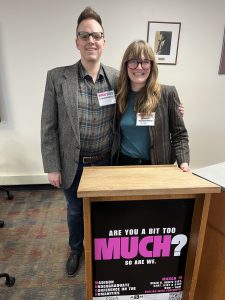
After this year’s amazing success, Wilder and Fiandeiro are planning to expand MUCH into a bigger conference, aiming to turn it into a “Midwest” Undergraduate Conference on the Humanities (MUCH). “Forming connections with other organizations and building structures that can last and continue to grow in the future was really amazing,” say Wilder and Fiandeiro. “Our hope is that after we have both left UW–Madison, the Midwest Undergraduate Conference on Humanities will remain an institution to keep growing and continue to thrive.”